
IT security researchers at WhiteScope Billy Rios and Jonathan Butts have discovered a critical security flaw in the design of the software responsible for running a huge number of Internet connected car washes in the United States. The flaw can allow an attacker to gain remote access to the equipment and take control of the doors, including locking them and causing whatever damage possible.
Originally, Rios noted the flaws back in 2015, and since then his mission was to find as many devices as possible and analyze what they are exposing to the public web. This time, to take his findings to a new level both researchers came up with an exploit for the flaw and with the permission of a car wash owner they successfully targeted the system.
The problem exists in PDQ Vehicle Wash Systems, a brushless automated car wash system which is operated through a software that runs on Windows CE (Compact edition) and uses a mechanical arm to spray around the vehicle. It must be noted that Windows CE was initially released in 1996 making it a 20-year-old operating system which is not even supported by Microsoft anymore.
The system is protected with login credentials ( a username and a password) which are easy to guess – especially if the user has not changed them since it was installed or in simple words, researchers say default credentials are easy to guess.
Upon knowing the login details, researchers exploited the vulnerability and sent remote commands to the car wash system directing it to close the bay doors, trap the vehicle inside, spray as much water and soap they want and even smash the vehicle around which can be life threatening for some customers trapped inside.
In a conversation with MotherBoard, researchers explained that “We believe this to be the first exploit of a connected device that causes the device to physically attack someone.”
Both researchers demonstrated their findings at the Black Hat security conference in Las Vegas.
This is not the first time when Billy Rios and Jonathan Butts have identified critical vulnerabilities in an IoT system. Previously, both researchers identified life threatening vulnerabilities in hospital drug pumps which can be exploited to remotely administer a fatal dose of the medication to a patient.
A couple of months ago, the researchers also exposed another life threatening vulnerability in pacemakers which can be exploited to conduct potential ransomware attacks on a targeted device.
In this era of technology, almost everyone owns an IoT device. While there is a lot that can be done to secure smart devices, users must change the default credentials of their IoT devices and use a strong password instead. Furthermore, keep your operating system updated and use protection against cyber attacks. Stay safe online.
Understand what is PDQ Vehicle Wash Systems
Source: Hack Read
Hackers can take over Car Wash, trap you and smash your vehicle
By Unknown

Also, every other day we hear about some incidents of hacking of crypto currency exchange or digital wallets, in which hackers stole millions of dollars in Bitcoin or Ethereum.
The latest back-to-back series of thefts of Ethereum—one of the most popular and increasingly valuable cryptocurrencies—in which around half a billion dollars in total were stolen is the recent example of how much hackers are after crypto currencies.
It's obvious that after ripping off hundreds of thousands of cryptocurrencies from exchanges, wallets and ransomware victims, cyber criminals would not hold them in just digital form—the next step is to cash them out into real-world money.
But how do they cash out without getting caught by law enforcement?

If you are unaware, there are some crypto currency exchanges involved in money laundering, who are illegally-operating to help hackers and cyber criminals easily cash out their digital currencies without identifying them, i.e. anonymously.
According to a recent research paper presented by three Google researchers, more than 95% of all Bitcoin payments collected from ransomware victims have been cashed out via a Russian cryptocurrency exchange, called BTC-e, since 2014.
Interestingly, just two days before Google presentation, one of the founders of BTC-e exchange, Alexander Vinnik, was arrested by Greek police on charges of laundering over $4 Billion in Bitcoin for culprits.
"We uncover the cash-out points, tracking how the money exits the Bitcoin network, enabling the authorities to pick up the money trail using conventional financial tracing means," the trio researchers, Luca Invernizzi, Kylie McRoberts and Elie Bursztein said."
Key Points — Tracking Ransomware Payments

The researchers followed the step-by-step money trail and got a look at the evolving ecosystem of ransomware families, which already helped make cyber-thieves at least $25 Million in the last two years.
- Most Damaging Ransomware Families: According to the research, two families of ransomware strain helped hackers made most of the money — Locky and Cerber — while other variants are also starting to emerge.
- Criminals looted In Millions: Locky has been the overall biggest earner for hackers at $7.8 Million and was the first ransomware infection to earn above $1 million a month to date, while Cerber has made $6.9 million to date with consistently making more than $200,000 a month.
- Victim's Favorite Places to Buy Bitcoins: Obviously, victims also need BTC to pay out criminals, and most victims choose LocalBitcoins, Bithumb, and CoinBase to buy BTC, where 90% victims pay in a single transaction.
- How Criminals Cash Out Cryptocurrency: According to the research, more than 95% of all Bitcoin payments for ransomware were cashed out via BTC-e, a service operational since 2011.
- Criminals Renting Out Botnets: Cybercriminal gangs behind Dridex, Locky and Cerber have taken Necurs botnet—army of compromised machines—on rent to distribute their ransomware infections on a massive scale.
Google conducted the research in collaboration with the researchers from New York University, University of California San Diego and blockchain analyst firm Chainalysis.
When talking about BTC-e, the cryptocurrency exchange is believed to have been involved in cashing out Bitcoins stolen from the once-very popular Japanese bitcoin exchange Mt. Gox, which was shut down in 2014 following a massive series of mysterious robberies.
Source: The Hacker News
How Hackers Cash Out Thousands of Bitcoins Received in Ransomware Attacks
By Unknown

The investigation showed that the targeted department was related to personal loans whose computers were accessed by hackers due to a local third party provider working with the customer data. Therefore it is being assumed that the hackers were able to steal IBANs, names, cell phones, and addresses.
UniCredit is confident that passwords allowing customers to access their bank accounts or carry transactions were not obtained during the attack.
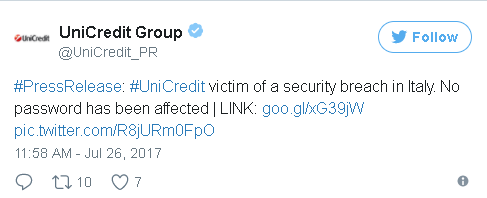
“UniCredit has launched an audit and has informed all the relevant authorities. In the morning, UniCredit will also file a claim with the Milan Prosecutor’s office. The bank has also taken immediate remedial action to close this breach,” said the press release.
The bank said the breach has been “closed” while it plans to contact the Milan Prosecutor’s office to file the claim. Those affected by the incident will also be contacted by the bank however those looking to talk to the bank directly can call on toll-free number 800 323285.
This is not the first time when an Italian institution has come under cyber attack. Previously, Anonymous claimed to steal and leak one terabyte of data from Expo 2015 tickets website to protest against the event.
Last year, Anonymous hackers claimed responsibility for hacking several Italian job portals and leaked a massive trove of their data to protect against new labor laws. While the biggest data breach from Italy came in 2015 when Milan based surveillance tool developers “Hacking Team” suffered a massive hack in which hackers leaked its source code online.
As for the UniCredit bank, none of the hacking groups have taken responsibility or claimed the hack anywhere including social media. Stay tuned for more information on the issue.
Source: https://www.hackread.com/
Italian Banking Giant UniCredit Hacked; 400,000 Customers Impacted
By Unknown

Today, most users surf the web unaware of the fact that websites and online services collect their personal information, including search histories, location, and buying habits and make millions by sharing your data with advertisers and marketers.
If this is not enough, then there are governments across the world conducting mass surveillance, and hackers and cyber criminals who can easily steal sensitive data from the ill-equipped networks, websites, and PCs.
So, what's the solution and how can you protect your privacy, defend against government surveillance and prevent malware attacks?
No matter which Internet connection you are using to go online, one of the most efficient solutions to maximize your privacy is to use a secure VPN service.
In this article, we have introduced two popular VPN services, TigerVPN and VPNSecure, which help you in many ways. But before talking about them, let's dig deeper into what is a VPN, importance of VPN and why you should use one.
What is a VPN & Why You Should Use It?
A VPN, or Virtual Private Network, is nothing but an encrypted tunnel between you and the Internet.
Once you connect directly to your VPN service, every Internet browsing activity of yours will go through the VPNs servers and blocks third parties, including government and your ISP, from snooping on your connection.
- Secure and Encrypted Web Browsing: VPNs enhance online security by keeping your data secured and encrypted.
- Online Anonymity: VPNs help you browse the Internet in complete anonymity so that no one can track the origin of your Internet connection back to you.
- Prevent Data & Identity Theft: VPNs encrypt all data transferred between your computer and the Internet, allowing you to keep your sensitive information safe from prying eyes and significantly reducing the risk of security breaches and cyber attacks.
- Unblock Websites & Bypass Internet Restrictions: VPN essentially hides your IP address, so your visits to any restricted sites do not register with the third-party, including your government or ISP, trying to block you, ensuring you enjoy the online freedom of speech.
- Hide Your Browsing History From ISP: VPNs stop your ISP from logging your web visit, as the spying ISP will not be able to see what you are visiting on the Internet.
- Multiple Device Supported: Many VPN services usually support multiple devices and work on all operating systems, such as Windows, Mac, Linux, Android, and iOS. With multiple device support, you can set up your PC, work computer and smartphone to access one VPN at the same time.
Get Best VPN Service — Lifetime Subscription
Dozens of companies today sell VPN services, and you can find plenty of reviews that can help you choose one.
But make sure to look for a VPN service that includes a large number of servers distributed worldwide, type of encryption, their privacy policies, speed and price.
If you are looking for an excellent and secure VPN service to start with, below we have introduced two best deals from THN Store, offering popular VPNs at highly discounted prices with lifetime access.

If you're searching for an affordable and cross-platform VPN service without any bandwidth limits, VPNSecure is the one you can trust on.
This premium VPN service is compatible with all operating systems, easy to use and setup offers lightning-fast connection and provides ultimate safeguards against hackers and cyber-thieves.
With strict no-log record policy, VPNSecure has many servers located in more than 46 countries and counting.
The VPNSecure Lifetime Subscription is available for just $39 at THN Deals Store, which without discount costs $450 — isn't this excellent deal, a one-time flat fee for a lifetime VPN subscription.

TigerVPN comes with a right mix of security, usability, and features, and supports Windows, Mac, Android, and iOS. It provides military grade encryption to make sure your entire communication on the Internet is end-to-end secure and protected.
The service doesn’t allow anyone, including your ISP or the government, to monitor, target or even sell your internet activity. With TigerVPN, you can enjoy the benefits of unlocking geo-restrictions from content providers like Netflix, Youtube, and many others with unlimited access to 15 VPN nodes across 11 countries.
The TigerVPN Lifetime Subscription is also available for just $39 at THN Deals Store, which without discount costs $780 — that's 95% off on its real value.
Secure VPN Services With Lifetime Subscription
By Unknown

The WannaCry infection is not only limited to computers but also affecting medical devices. The IT security community are doing whatever it takes to stop the cyber criminals behind the whole campaign from spreading the virus further and targeting unsuspecting users. One of those researchers was Marcus Hutchins from the United Kingdom who discovered a domain used by WannaCry to communicate at the point of infection. Marcus did not only discover the domain but also registered it resulting in halting infection since the domain turned out to be the KillSwitch for WannaCry attack.
Now, Marcus has revealed that the domain he registered is receiving distributed denial-of-service (DDoS) attack which means the hackers are trying to take down the domain so they can carry on with the malware attack. The hackers are using variants of the Mirai botnet for their attacks. The infamous Mirai malware was discovered last year and conducted the Internet’s largest ever DDoS attack on DYN’s DNS and OVH hosting in France through compromised CCTV, DVRs and routers.
Now, Marcus has revealed that the domain he registered is receiving distributed denial-of-service (DDoS) attack which means the hackers are trying to take down the domain so they can carry on with the malware attack. The hackers are using variants of the Mirai botnet for their attacks. The infamous Mirai malware was discovered last year and conducted the Internet’s largest ever DDoS attack on DYN’s DNS and OVH hosting in France through compromised CCTV, DVRs and routers.
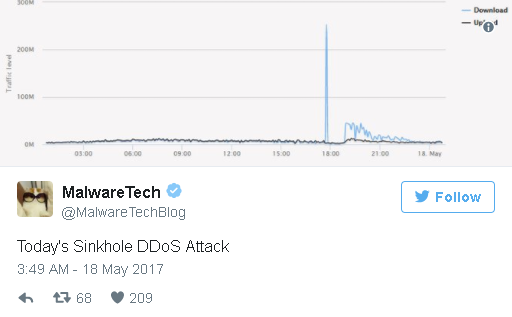
According to Wired, the KillSwitch is under DDoS attack and the attacks have peaked at 20 gigabits per seconds and are trending up. If they succeed, the inoperative WannaCry system will come back to life and begin to spread again.
Now a few devious hackers appear to be trying to combine those two internet plagues: They’re using their own copycats of the Mirai botnet to attack WannaCry’s kill-switch. So far, researchers have managed to fight off the attacks. But in the unlikely event that the hackers succeed, the ransomware could once again start spreading unabated.
“Pretty much as soon as it went public what had happened, one of the Mirai botnets started on the sinkhole,” says Marcus Hutchins, the British security researcher who registered the WannaCry kill-switch domain. Since then, he says, near-daily attacks from that first botnet and others built with the same Mirai malware have steadily ticked up in size and impact.
If the DDoS assault succeeds, WannaCry infections would immediately reignite. The ransomware stops scanning for new victims 24 hours after installing itself on a computer, says Matt Olney, a security researcher with Cisco’s Talos team. But anytime one of those infected machines reboots, it starts scanning again. “The ones that were successfully encrypted are in this zombie state, where they’re waiting to be reactivated if that domain goes away,” says Olney.
It must be noted that the second KillSwtich for WannaCry was identified by a French security researcher Matthieu Suiche but as of now, there is no indication if the KillSwitch domain owned by him is receiving DDoS attacks or not. However, the good news is that Suiche has come up with “wannakiwi,” a tool which helps users to clean their devices from WannaCry infection.
If your device has been infected with this nasty malware download ‘wannakiwi’ tool from here.
WannaCry Is Trying To Come Back From The Dead With The Help Of Mirai Botnet
By Unknown

Screenshots:

Kba Squad share a post about the second target:

HALK TV website when is offline:

Anonymous update the pastebin file:

Turkey Cyber Attack: Anonymous Shut Down More Turkish TV Channels
By Unknown

There are some screenshots from website


When the .24 TV was Live, Anonymous spam their chat with a lot of messages

Anonymous showing the pastebin text

Anonymous also claims: "We will attack CNN TURK after .24 Turkish Channel"

Kba Squad was also share a post on their FanPage about the cyber attacks


Anonymous and Kba Squad take the responsibility for Cyber Attacks on Turkish TV Channel
By Unknown
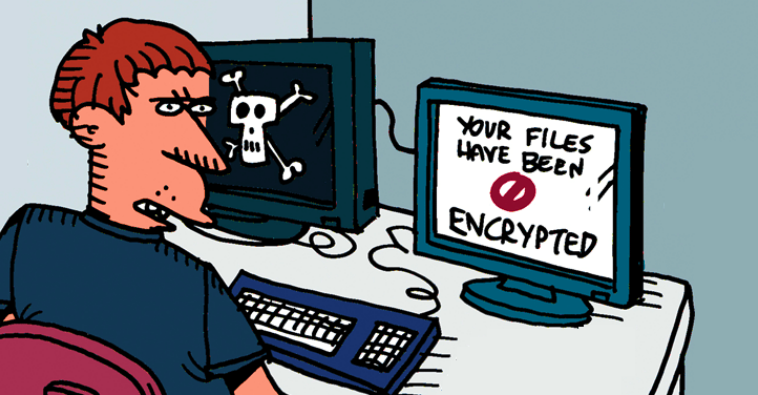
These malicious applications lurk around waiting for gullible web users to fall for their trap. Once the malware gets installed in the system, it effectively locks all the functions of your computer rendering your OS useless, until you pay the hacker a huge sum of money as ransom. The entire purpose of the ransomware threat is simple to extract money from you for restoring the data it has captured.
Some Scary Stats About Ransomware
- Since January 2016, there have been 4,000 ransomware attacks, that’s 300% increase as compared to data from 2015.
- In 2015, more than 25,000 enterprise users reported ransomware infections in their computers. A Kaspersky Labs report suggests that in 2016, the number rose to 158,000.
- A Webroot press release claimed that in 2015, close to 100,000 malicious IP addresses were being created every day, indicating how cybercriminals rely on changing identities.
Read on to know more about the dangers of ransomware and how to protect your computers from it:
The Do’s and Don’ts of Protecting Critical Data

Ransomware is not a new term for web developers and entrepreneurs; in fact, this online threat has been around for a quite a while now. It’s been around for a number of years; the first known version dates back to 1989. However, the current sophisticated ransomware that we see today popped up somewhere around 2010. Ransomware is a threat not just to people in business but also ordinary web users who’re online just to check their emails or their Facebook newsfeed. Listed below is a comprehensive list of dos and don’ts that every web users must follow so as to ensure that they never fall prey to ransomware:
- Install an anti-virus software and keep it updated
- Always keep the firewall activated on the browser
- Never share your personal information or any sensitive data online unless you are sure of the authenticity of the platform
- Never click on suspicious links or pop-ups that claim how your system is infected with malicious programs, and you need to ‘click’ to clean up.
- Keep a backup ready, in case your data gets lost
- Save your data on the cloud, it safeguards your files and makes data recovery easier.
- Keep the operating system and other crucial applications on your computer up to date.
What To Do If Ransomware infects your System?
In case you didn’t detect ransomware with siem, and your system does get infected, don’t panic. The list of rules mentioned above only ensure that your computer doesn’t fall prey to malware; it gives you no information on what to do if your system is already infected. Business enterprises, established organizations and web browsers – no one is spared from these malicious ransomware cyber minds.
You cannot undo what’s been done, but you do have control over your future course of action. We would now discuss the options a web user has when ransomware has compromised his account or system.
Do not, under ANY circumstance, pay the ransom!
Giving in to the demands of the hackers seems like the only practical option when the question of data security looms ominously in the background. However, that doesn’t necessarily have to be true. Paying ransom might seem like the easy way out but remember that doing so would only fuel their illegal activities and fund the attackers. Moreover, even if you end up paying the said amount, there is no guarantee that your files would be decrypted and restored safely. Caving into these criminals in the hope of returning the files held hostage only gives them leverage to use the information against you for future attempts of extortion.
So, What Should You Do?
The first and foremost thing that you should do is try removing the infected program from the server and safeguard your system. Each application has its own removal and deactivation process. These tutorials and help articles will give you a systematic, step-by-step guide on how to successfully remove the affected program without compromising on the security of your system. Note that the removal process works best when the system is disconnected from the network so as to minimize the risk of the ransomware spreading to other applications as well.
Once you have terminated the infected program, your next course of action should be to restore the data held by hackers. Using a good and reliable backup platform is the easiest way to reclaim the lost information. When your data gets attacked by ransomware there are two options that you can choose from- either pay the ransom (not recommended) or restore the data via backup. There is no third way out. You can snoop around online looking for “shadow copies” or variants of the original files, but even those are of no help as hackers today use advanced RSA-2048 bit encryption key that not even “brute force” can break into.
How Do You Safeguard Your Data?
Ransomware though possibly the most dangerous of online threats is nothing different from any ordinary malware if you look closely into its nature and functionality. Before we begin to talk about the various precautionary measures to protect your system against any ransomware, please note that the program spreads just like any other malware and needs an outlet, a weak point or a crack in your network through which it can infiltrate your system. Following safe browsing and computing practices and playing by the rules mitigates the risks of a ransomware attack. Mentioned below are some precautionary measures that every web user must adopt. It is better to be safe than sorry.
Always Be Suspicious
It is always better to be on the lookout for suspicious activities than be complacent and regret it later. Moreover, no malware programs today come with a warning or any such indication of their true nature; hackers are way smarter than that. Cyber minds are always updating their hacking standards using new and innovative technology to dupe customers. Most of the time the infected files and malicious malware comes disguised as an alert message or an unexpected email from your contact list. Never click on any attachment or hyperlink that seems fishy. Also in case, you notice any suspicious file or email that asks for your personal information or bank details, double check it with the source company or sender before you download the attachments or give away any such sensitive data. Think twice before you click on files with suspicious extensions such as .exe
Keep Your System Updated
The fact that ransomware acts like any other malware and spread the same way a virus would be encouragement enough to keep your operating system updated as per the latest standards. Keeping all the applications, software and other core programs on your system upgraded to the latest standards only decrease the chances of a ransomware infestation. The developers of a program release updates and bug regularly fix that slowly but steadily changes the basic functionality of the system. If you do not tweak the OS accordingly, your files automatically become susceptible to an online attack.
Run a Reliable Anti-Virus On The System
With constant updates and cloud backup support, it is tough for the ransomware malware to infiltrate your system. However, it is always safer if you also install a robust and reliable anti-virus system on your computer or mobile device. The anti-virus protection automatically deflects all Trojan programs, suspicious files and blocks any malware that might prove harmful for your system. Moreover, the cost of anti-virus software is any day less than the price you will have to pay in case your files are stolen by a dangerous program. Anti-virus programs like Quick heal and Avast also offer firewall services for safer web browsing.
Always Have Backup
If by any chance your system does get infected with ransomware and the security of your information is at stake, cloud-based storage can effectively save the day. Having a backup either on the cloud or any offline external memory device saves you the trouble of paying to access your own files. Creating multiple backups sounds like a smart solution for users who want to protect their data from ransomware and other threats. For instance, Synology Cloud Station backup is a good option to back up stored data of the PC with the NAS system. Here, you get the option of creating almost 32 versions of the same file!
The Best Security Hacks To Apply Now
Prevention is always better than cure; this holds true for all your online activities as well. Discussed below are the best security hacks of the year that every web user should apply right this moment to safeguard their files from ransomware and other virus threats.
Keep a Firewall Application With Web Merging Features
Installing a firewall is perhaps among the safest ways to protect your browser from any malware floating on the web. The firewall stands as a powerful barrier between the browser and your system, it meticulously checks and scans everything you download or install on your device from the internet. FortiGate, SonicWall, Untangle, UTM are among the top firewall programs that offer robust protection against ransomware. These applications are also known for blocking websites that have malicious content that can harm your system in any way.
A Centralized Anti-Virus Management Server
Anti-virus companies such as MacFree, Avast, and Sophos provide users with a centralized console for monitoring and managing your online and offline activities. This is an excellent feature for IT companies and multi-tier organizations that can now get all the notifications about the various departments on the local server as well as track the activities of a SaaS cloud-based platform in a single place. A more advanced version of the anti-virus also gives you the freedom to set up the trigger and execute them on the network accordingly restricting access or disabling certain sections as and when required. Ensure that the anti-virus is always up to date with the latest upgrades released in the market.
Ensure That User Accounts Have Minimum Rights
The ransomware attacks are typically sourced from end-user accounts and can enter the network even if any member of the network installs or clicks on a suspicious attachment. Not all users should be given the same level of freedom and access to the files and folders on the server. This is where the “principle of least privilege” comes into the picture. When you assign security permission and accessibility to end-users, give them the liberty and authority to access only those files that they strictly need to complete their assigned tasks. Doing so would drastically minimize the risk of ransomware. It is smarter to authorize a few trusted people in the organization than to open the network for everyone.
Setup Correct File and Folder Level Permissions
While a firewall ensures that your files are protected from any external threats looming on the server setting up various correct file and folder level permissions protect your data from any internal security threat. Adding permissions and passwords that restrict end-user access to certain files prevent the risk of them hoarding the data and asking you money in exchange for it. You can tweak the access points of the NTFS security system giving only certain trustworthy users the authority to access the files on the server. By doing so, you are automatically blocking all attempts by external parties to barge into your system and steal data.
Enable Creation of Volume Shared Folders on Shared Drives
Enabling the creation of volume shadow copies of the existing files and folder on the server is an added protection against ransomware that every organization should adopt. The shadow copies that you store on the shared network of the server can be accessed in case of a malware attack. Also depending on the way you store the files, the application also allows you to restore the files in their original form despite the changes made to them during the course of time (here the changes signify the attack of ransomware that encrypts files). The volume shadow copy feature comes pre-installed in the Windows OS. You can enable it from the File Explorer section.
Install File Screening
One of the easiest ways of ensuring that your system is protected from ransomware and other online threats is by setting up FSRM or File Server Resource Manager on your primary file server. It screens all the sites and information you access online and tracks your web presence. The system helps you monitor and control end-point access and restrict suspicious files and programs from entering the system via the main server. It minimizes the risk of a malware infestation by preventing the end users or clients from wreaking havoc on your system. FRSM scripted solutions allow you to trigger various policies that deflect the malware’s attempt at infiltrating your device.
Offline Backup and Data Security
Data backup doesn’t necessarily involve online storage solutions and cloud-based services. Sometimes it can also be about offline storage. However, that does not mean you store the information in the same system by creating a second base partition in the memory. That still renders the files vulnerable to a ransomware attack. No, what you need is a powerful and dependable offline storage solution that can give you unrestricted access to information in case of an emergency situation or on-site disaster. External hard disks, USB storage devices, and NAS devices are among the most popular off offline backup choices among users.
GPO Restrictions And Patching
Installing GPO restrictions on the network reflects not only ransomware but all kinds of malware and virus threats allowing you to use the network freely. It provides granular control assisting users in tracking the execution files right from their source to the end point. Therefore, by enabling GPO restrictions, you can easily block any suspicious activity and stop any malicious attachments from downloading automatically on the system. You even get the freedom to disable extensions and files from executing. Another method that you can use here is Patching, a technique that can be accessed from third party applications such as Java, Flash or Abode.
The Bottom Line
Like everything else, even the World Wide Web has its fair share of ups and downs. The technological developments though a boon for online ventures have also contributed to the growth of cyber crime. It has unfortunately also assisted hackers in creating nastier malware that can destroy the very foundations of your website. Moreover, the fact that ransomware has now started infecting Mac devices as well has only added on to the hype around it being the most dangerous of cyber crime tools out there.
How To Prevent Growing Issue of Encryption Based Malware (Ransomware)
By Unknown
Subscribe to:
Posts (Atom)